Buying Guides
Bacteriostatic Water Shipping: Transit, Temperature and Arrival Checks
Bacteriostatic water shipping raises two questions for a lab: how quickly the order arrives, and what temperatures the parcel went through on the way. The dispatch cutoff and the carrier settle the first. The weather settles the second, along with how long the box waits before someone brings it inside.
This guide covers how our orders ship, why a vial labelled for room temperature travels without a cold chain, which exposures in transit matter, and what to check when the carton arrives. It is about logistics and receipt, not about using the product.
Published by BacterioWater8 min read
For laboratory research use only. Not for human or veterinary use. RUO disclaimer
In short
- Bacteriostatic water is labelled for controlled room temperature, 20–25 °C, so it does not need to be shipped cold.
- USP <659>, the standard behind that label term, allows excursions of 15–30 °C during shipping and brief spikes up to 40 °C for no more than 24 hours. The label rules out freezing.
- Parcels often leave the 20–25 °C range. In a 2023 study, data-logged packages spent an average of 68% of transit time outside it, with winter the worst season.
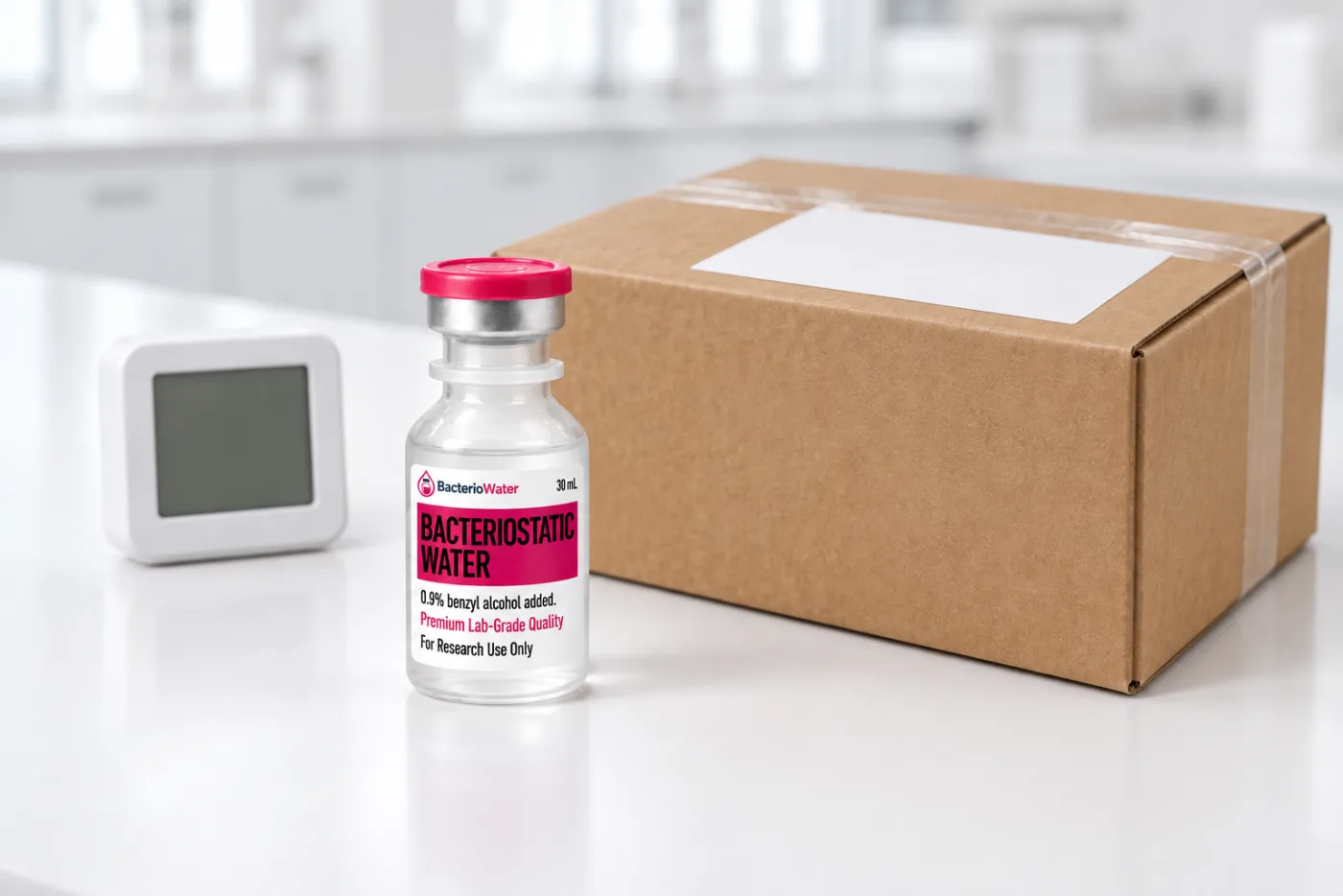
- Our orders leave the same business day when placed by 2 PM ET, Monday to Friday, and travel by UPS Ground from Florida: 1–5 business days across the contiguous US.
- On arrival, check the carton, every cap and crimp, the contents and the lot code against the published certificate, then record the date received.
How an order ships
Orders placed by 2 PM ET, Monday to Friday, are packed and handed to UPS the same business day. Orders placed after the cutoff, at a weekend or on a public holiday leave on the next business day. Every order ships from Okeechobee, Florida, by UPS Ground, and the tracking number is emailed at dispatch.
| Stage | What sets it | Time |
|---|---|---|
| Order to dispatch | The 2 PM ET cutoff, Monday to Friday | Same business day, or the next one after the cutoff |
| Dispatch to delivery | UPS Ground from Florida | 1–5 business days across the contiguous US |
| Other US addresses | UPS Ground | Longer; the estimate is shown at checkout |
Ground is the only service we offer. Placing the order before the cutoff on a business day is what gets it moving the same day.
Is bacteriostatic water shipped cold?
It does not need to be. The label specifies controlled room temperature: store at 20–25 °C, protected from excessive heat, strong light and freezing. A product labelled that way does not require a cold chain in transit.
Cold packs also bring a risk of their own. A frozen gel pack resting against a vial can chill its contents towards freezing, the one condition the label excludes outright.
Controlled room temperature is a defined term from USP <659>, and the definition covers shipping explicitly:
- Storage range
- 20–25 °C (68–77 °F), maintained thermostatically.
- Permitted excursions
- 15–30 °C (59–86 °F), including those that occur during shipping.
- Transient spikes
- Up to 40 °C (104 °F) for no more than 24 hours, provided the mean kinetic temperature does not exceed 25 °C.
- Freezing
- Not covered by any tolerance. The label instruction to protect from freezing excludes it.
Mean kinetic temperature is an average that gives hot periods more weight than a simple mean would, so a short, very hot spell counts for more than its length suggests.
Once the vials are on your shelf, the same label applies. Storage and handling covers refrigeration, light and in-use dating.
What temperatures a parcel actually sees
A 2023 study in the Journal of the American Pharmacists Association measured this directly. The researchers shipped 36 packages fitted with data-logging thermometers between New Jersey, California and Tennessee, using three common carriers and two shipping speeds, in winter and in summer.
- On average, packages spent 68.3% of transit time outside 20–25 °C.
- Winter was the worse season. Packages spent about 80% of transit time out of range whether they went next business day (78.0%) or 3-day (80.1%).
- In summer, speed helped: 13.6% of transit time out of range for next-business-day packages, against 43.1% for 3-day.
- The lowest and highest temperatures recorded were −14.9 °C (5.1 °F) and 39.1 °C (102.3 °F).
Two points matter when reading these figures. The study measured against the 20–25 °C storage range, not the wider 15–30 °C band that USP <659> allows in transit, so ‘out of range’ does not mean outside the label’s tolerance. It also did not test our packaging.
What it does show is that a parcel’s temperature follows the weather, that cold was the more persistent exposure, and that faster shipping did little to reduce it in winter.
Heat and freezing in transit
Heat
The label excludes excessive heat, and USP <659> limits brief spikes to 40 °C. The heat exposure that is easiest to prevent happens on the last leg: a parcel left in a closed vehicle, on a sunlit doorstep, in a mailbox or on a loading dock in summer. Sustained heat speeds chemical change in the solution, including the slow oxidation of benzyl alcohol, and can stress the closure.
Freezing
Water expands as it freezes, and the rubber stopper under the crimp is what keeps the vial sealed. A freeze–thaw cycle stresses that seal, and a thawed vial can look normal afterwards. For that reason the label excludes freezing instead of setting a limit for it. Set aside a vial that arrives with ice or slush in it, or that you know was frozen, instead of adding it to lab stock.
What the parcel records
Neither exposure leaves a mark on the carton. Tracking does record when the parcel was delivered, and the time between that scan and someone bringing the box inside is the part of transit you control.
Planning a delivery around the weather
- Ship to an address where parcels are received in person during working hours, such as a staffed lab, a front desk or a receiving department, rather than an unattended porch or mailbox.
- Order early in the week. A parcel dispatched on a Friday is more likely to sit in the carrier’s network over the weekend than one dispatched on a Monday.
- Check the forecast at the delivery address. If a hard freeze or a heatwave is due, time the order so the delivery lands on a day someone is there to bring it in.
- Watch the tracking email for the scheduled delivery date, so someone is ready to take the parcel inside.
- Order in fewer, larger shipments. Each one is a single journey through the carrier network, and every vial in an order comes from the same tested lot.
Bacteriostatic water shipping checklist: what to check on arrival
Run these checks before the vials go on the shelf. The first one is easier to document before the carton is opened.
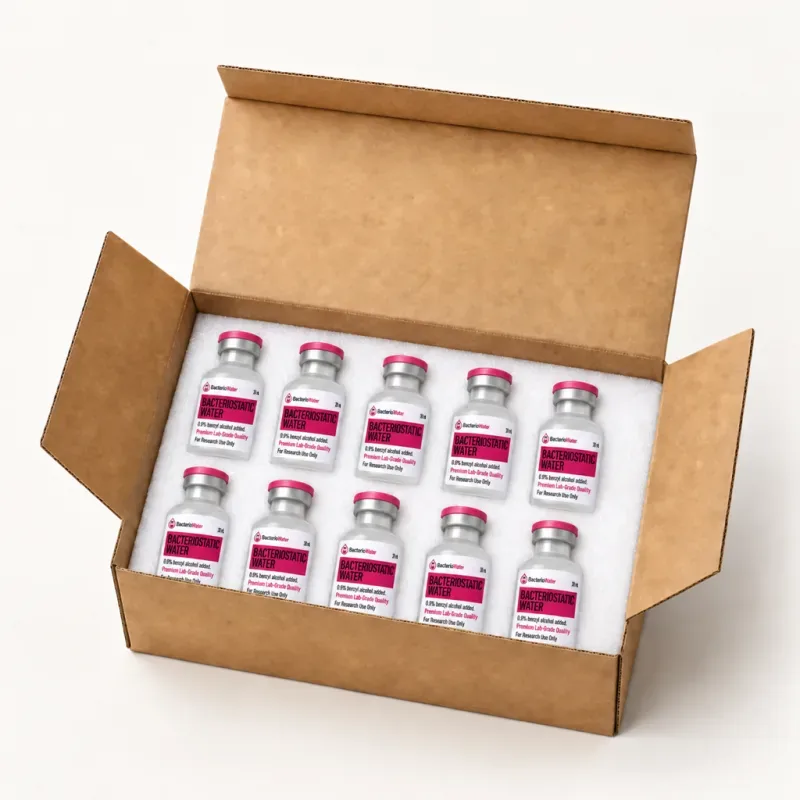
- The carton: note any crushing, punctures or water damage. If it is damaged, photograph the outer packaging before opening it.
- The count: compare the number of vials with your order confirmation. Larger orders can arrive as more than one package, so check tracking before reporting a shortfall.
- The seals: every flip-off cap present and every aluminium crimp intact. A missing cap or a lifted crimp means the vial cannot be shown to be unopened.
- The container: no cracks, leaks or deformation.
- The contents: clear and free of particles, matching the ‘clear liquid’ appearance recorded on the certificate. Ice, slush or cloudiness is a reason to set the vial aside.
- The lot code: the code on each label should match the lot whose certificate is published on our Lab Testing & COA page.
- The record: log the lot code, the date received and where the vials are stored. This starts the vial log described in our storage guide.
This is the certificate for the lot shipping now:
Current shipping lot
- Product
- 30 mL Sterile Bacteriostatic Water (0.9% benzyl alcohol)
- Tested for
- Identity · Purity · Benzyl alcohol level · Microbial DNA · Sterility · Endotoxins · pH
- Tested by
- Freedom Diagnostics and Chromate, independent
- Reported
- September 4, 2026
- Status
- Currently shipping on all orders
The lot code on your vial label should match the code above.
How to read a certificate of analysis explains each line and how to verify the document with the laboratory that issued it.
If a shipment arrives damaged, late or not at all
- Damaged, leaking or incorrect
- Contact us as soon as possible with your order number, photos of the packaging and the product, and a short description. We review each case and, where our policy covers it, arrange a replacement or credit.
- Tracking has stalled
- If tracking shows no movement for several days, send us the order number and tracking details and we follow up with UPS.
- Marked delivered, not received
- Check the delivery address on your confirmation and ask your front desk, mail room or receiving department. If the parcel is still missing, contact us and we help open an investigation with the carrier.
- Known heat or freezing exposure
- Set the vials aside, note what happened and for how long, and contact us with the order number and lot code before adding them to stock.
The full terms, including how returned vials are inspected, are on our Shipping & Returns page.
Ordering with shipping in mind
Bacteriostatic water shipping goes smoothly when the order leaves before the cutoff and someone is there to receive it. Buying for a project in one order means one delivery to inspect, one lot code to record, and a lower price per vial as the pack size goes up.
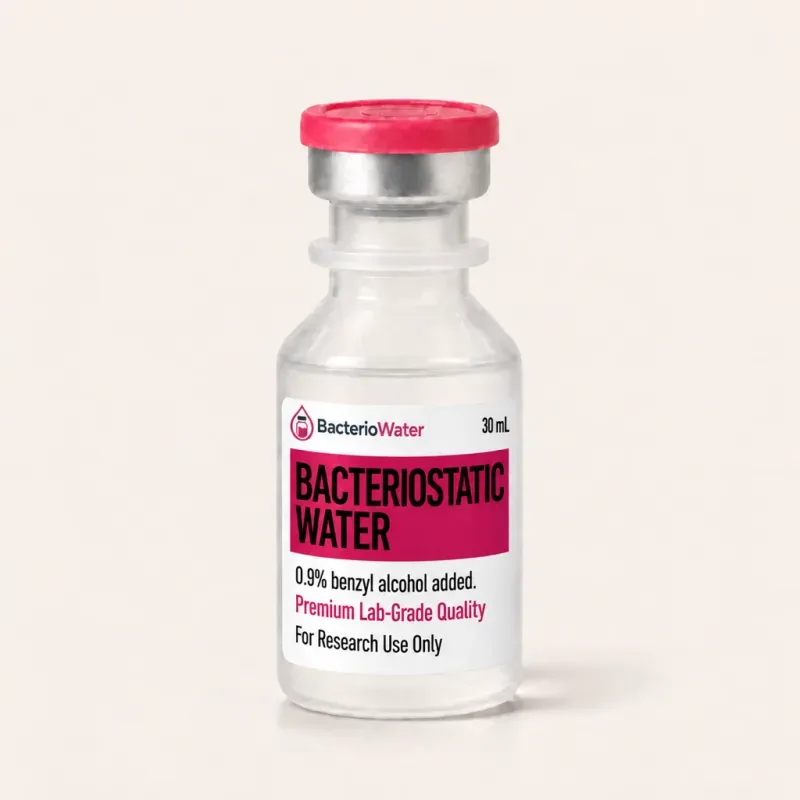
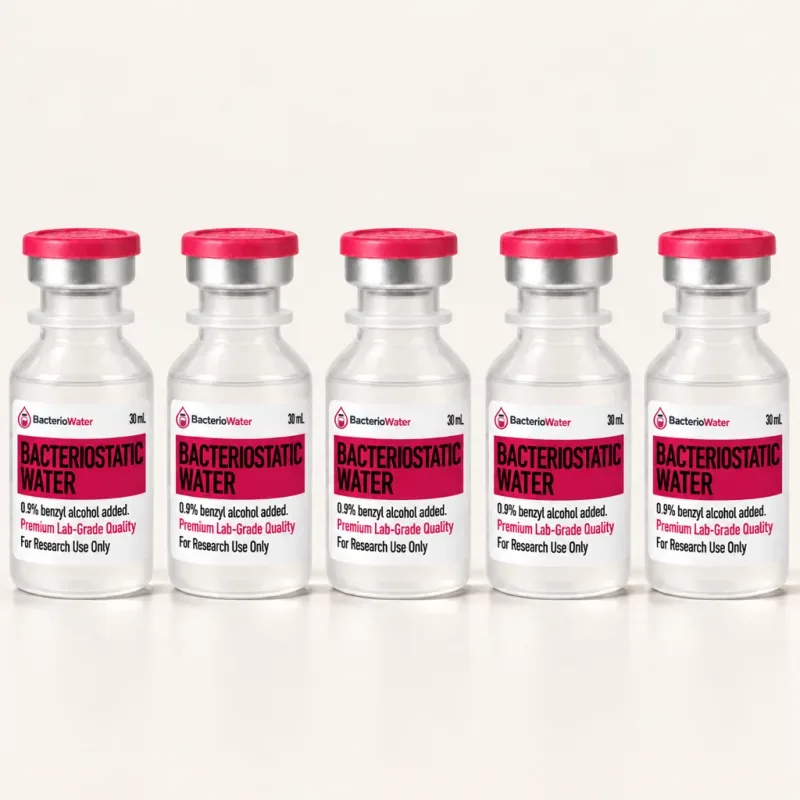
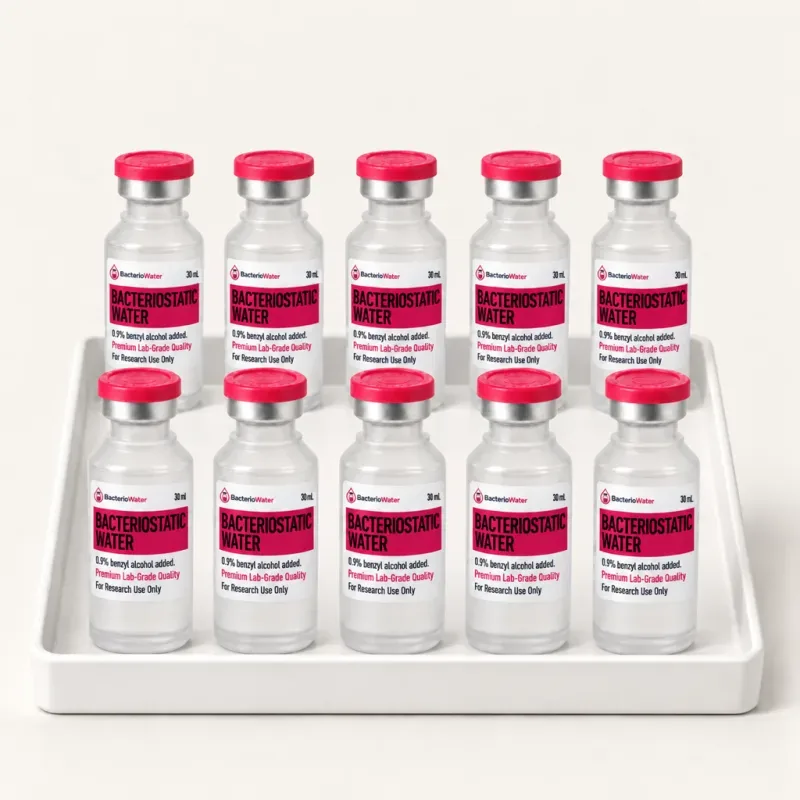
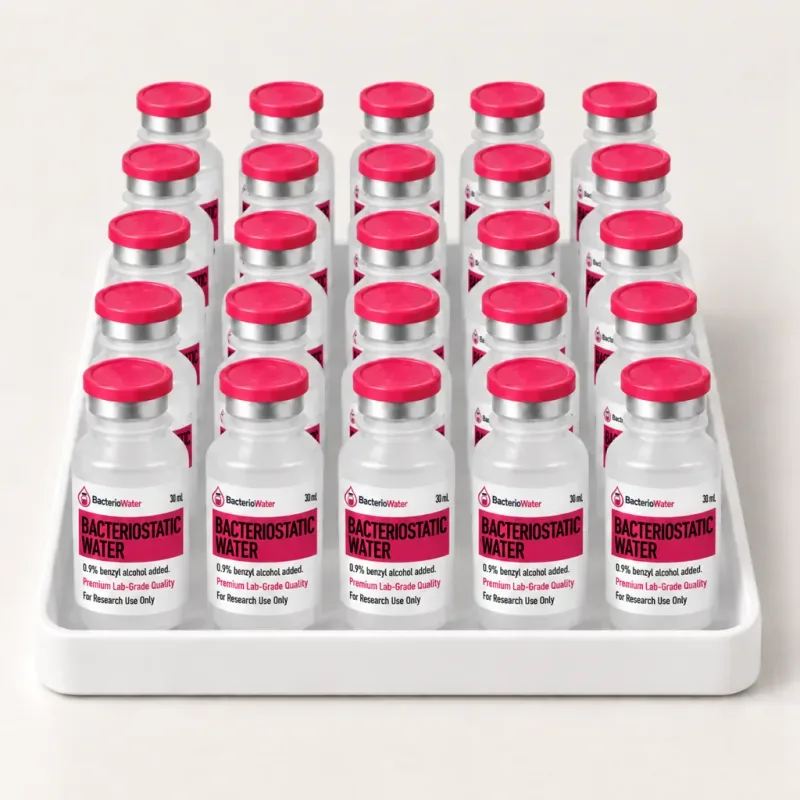
Every pack contains the same 30 mL vial. All pack sizes are in the shop, and orders of 200 vials or more are quoted through wholesale.
For laboratory research use only. Not for human or veterinary use. Nothing in this article is a dosing, protocol, or medical instruction. Read the full RUO disclaimer.
References
USP <659> Packaging and Storage Requirements
Defines controlled room temperature (20–25 °C), the 15–30 °C excursions allowed during shipping, and the 40 °C, 24-hour limit on transient spikes.
36 data-logged packages across three carriers, two shipping speeds and two seasons. The source of the transit figures quoted above.
PubChem CID 244 — benzyl alcohol
Chemical data for the preservative, including its slow oxidation to benzaldehyde.
Product label and storage statement
The storage conditions quoted here are printed on the vial.
Dispatch cutoff, carrier, service area, and what to do about a damaged, delayed or missing parcel.
Certificates of analysis for the lot currently shipping
The appearance and lot code used in the arrival check.
Questions this raises
Is bac water shipped cold?
It does not need to be. Bacteriostatic water is labelled for controlled room temperature, 20–25 °C, and USP <659> allows excursions of 15–30 °C during shipping. The label excludes freezing, so a cold pack in contact with the vials adds a risk rather than removing one.
What if a parcel sat in a hot car or on a doorstep?
USP <659> allows brief spikes up to 40 °C for no more than 24 hours. A closed vehicle or a sunlit doorstep in summer can exceed that. If you know a parcel was exposed for hours, set the vials aside, note the conditions, and contact us with your order number and lot code before adding them to stock.
Do you offer overnight or express shipping?
No. Orders ship by UPS Ground only. Placing the order by 2 PM ET, Monday to Friday, gets it dispatched the same business day, and Ground takes 1–5 business days across the contiguous US.