Storage & Handling
Bacteriostatic Water Storage and Handling in the Lab
Bacteriostatic water (bac water) is an undemanding product to store and an easy one to quietly ruin. Almost all of the risk sits in two places: what temperature the box saw before it reached the shelf, and what happens at the stopper once the vial is in use.
These are the storage conditions printed on the label, the standards laboratories generally hold opened containers to, and the handling points worth writing into an SOP.
Published by BacterioWater6 min read
For laboratory research use only. Not for human or veterinary use. RUO disclaimer
In short
- Store at controlled room temperature, 20–25 °C. Protect from excessive heat, strong light and freezing.
- Do not refrigerate or freeze as routine storage — colder is not safer here.
- The preservative suppresses growth between accesses. It does not sterilise, and it does not recover a contaminated vial.
- USP <797> gives a preserved, repeatedly entered container a 28-day in-use date after first puncture unless the manufacturer states otherwise. It is the convention most laboratory SOPs adopt.
- Record the lot code and the first-puncture date. It costs nothing and it is what makes a result traceable.
The storage conditions on the label
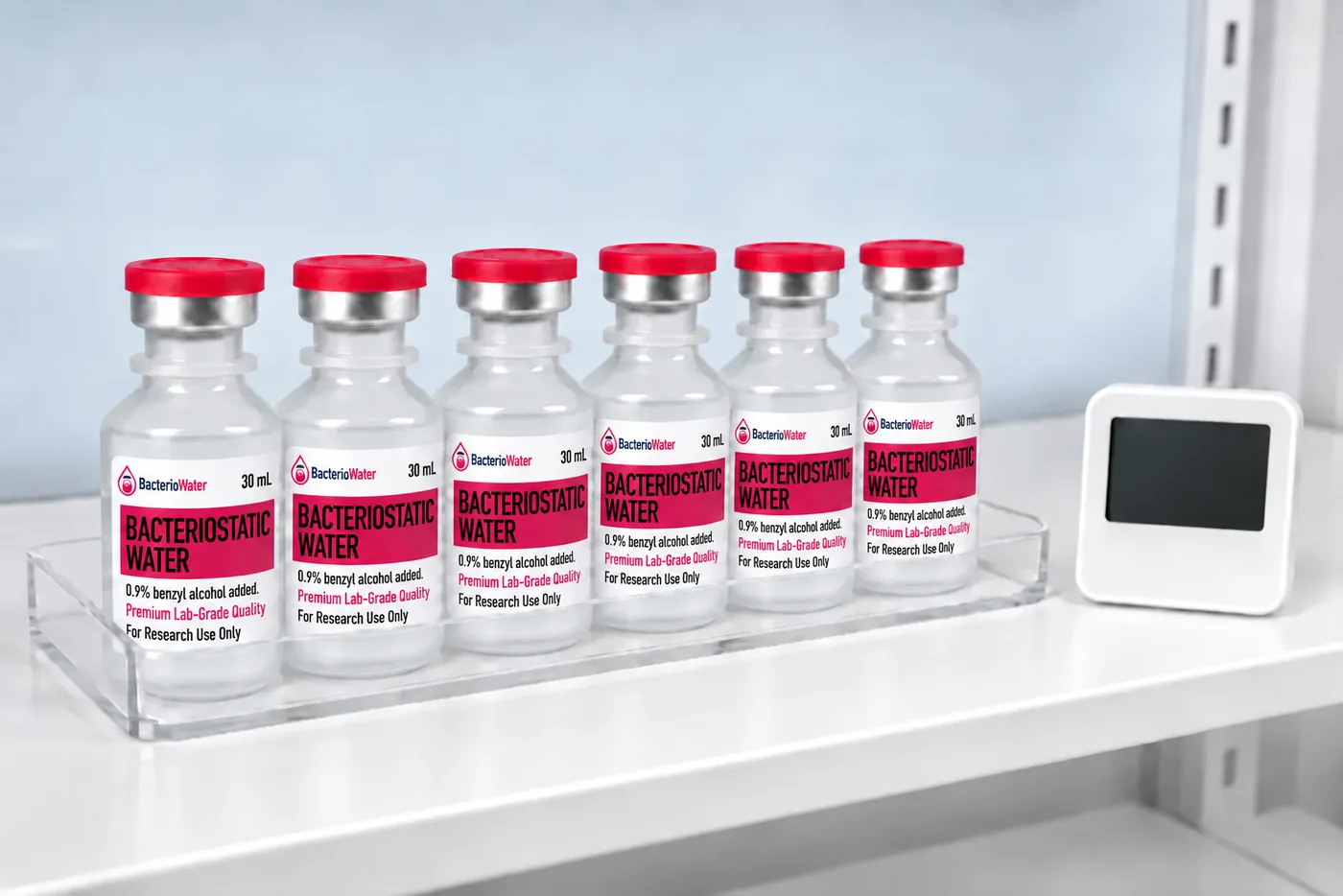
‘Controlled room temperature’ is a defined term rather than a vague one. USP <659> describes it as a thermostatically maintained 20–25 °C, with brief excursions between 15 °C and 30 °C tolerated as part of normal handling. A cupboard on an interior wall meets that. A windowsill, a shelf next to an autoclave, and the back of a car in August do not.
The instruction to protect from strong light is not decorative either: benzyl alcohol oxidises slowly toward benzaldehyde on exposure to air and light. Leaving vials in their carton until use is the whole of the mitigation, and it is free.
Why freezing is the failure mode people miss
Refrigeration reads as caution, so it is what people reach for when a product ‘seems delicate’. For a preserved aqueous solution in a stoppered vial it is the wrong instinct. There is no benefit to gain — the label period already assumes room temperature — and there is a container-closure risk to take on.
Water expands as it freezes, and the seal at the stopper is what maintains the integrity of the vial. A freeze-thaw cycle stresses that seal, and a vial that has been through one can look completely normal afterwards. Nothing on the outside of the container records the event, which is exactly why the label excludes it rather than qualifying it.
Heat is the mirror image: sustained excursions above the range accelerate chemistry in the solution and can affect the closure. Both directions are worth logging when a shipment is left outdoors or a store room loses climate control.
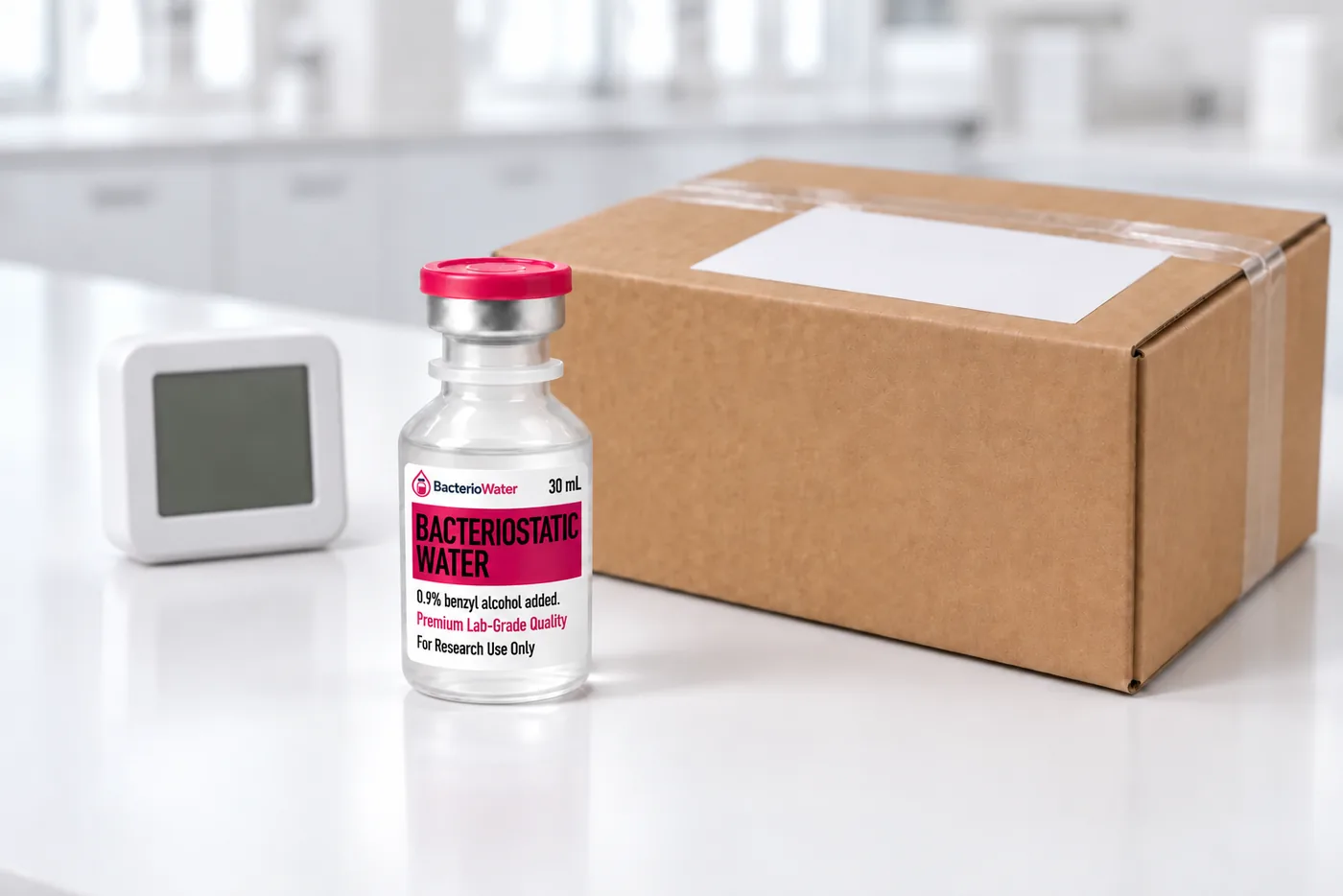
Transit is the leg you do not control. Orders from us ship tracked within the US; inspect vials on arrival, and note any excursion you know about before the box goes on the shelf. Bacteriostatic water shipping covers transit temperatures and the arrival check; delivery and damage handling are on shipping & returns.
What the preservative does at the stopper
It suppresses growth — it does not sterilise
0.9% benzyl alcohol inhibits the proliferation of organisms introduced during access. That is what makes repeated entry into one container viable at all. It is not a sterilant, it acts on a timescale, and it will not rescue a vial that has taken a real contamination event. The distinction is covered further in bacteriostatic water vs sterile water.
Aseptic technique still applies
- Swab the stopper with 70% isopropyl alcohol before every entry and let it dry — contact time is doing the work, not the wipe.
- Use a fresh sterile needle or cannula for each entry.
- Never return withdrawn liquid to the vial.
- Never pool the contents of two vials into one container: you inherit the shorter in-use date and both lots’ histories.
- Handle the vial in a controlled area appropriate to the work, and record entries as you go rather than reconstructing them later.
Coring
Repeated punctures of a rubber closure can shear a small fragment of the stopper into the solution. Entering at a slight angle with a fresh sharp needle each time reduces it; a stopper that looks visibly chewed after heavy use is a reason to retire the vial rather than to keep going carefully.
Shelf life: label expiry and the 28-day in-use date
USP <797> assigns a maximum 28-day beyond-use date to a preserved container that is entered repeatedly, counted from first puncture, unless the manufacturer specifies a different period. That is a compounding standard rather than a product specification, but it is the default that most laboratory SOPs adopt for preserved vials, and it is where the ‘28 days’ figure in circulation comes from.
Two dates therefore govern a vial, and they are not interchangeable:
- The expiry on the label
- Applies to the sealed, unopened vial stored as labelled. It comes from the manufacturer and nothing you do extends it.
- The in-use date you assign
- Starts at first puncture and is set by your own procedure. Write it on the label at the moment you open the vial, not at the end of the day.
A vial log costs nothing
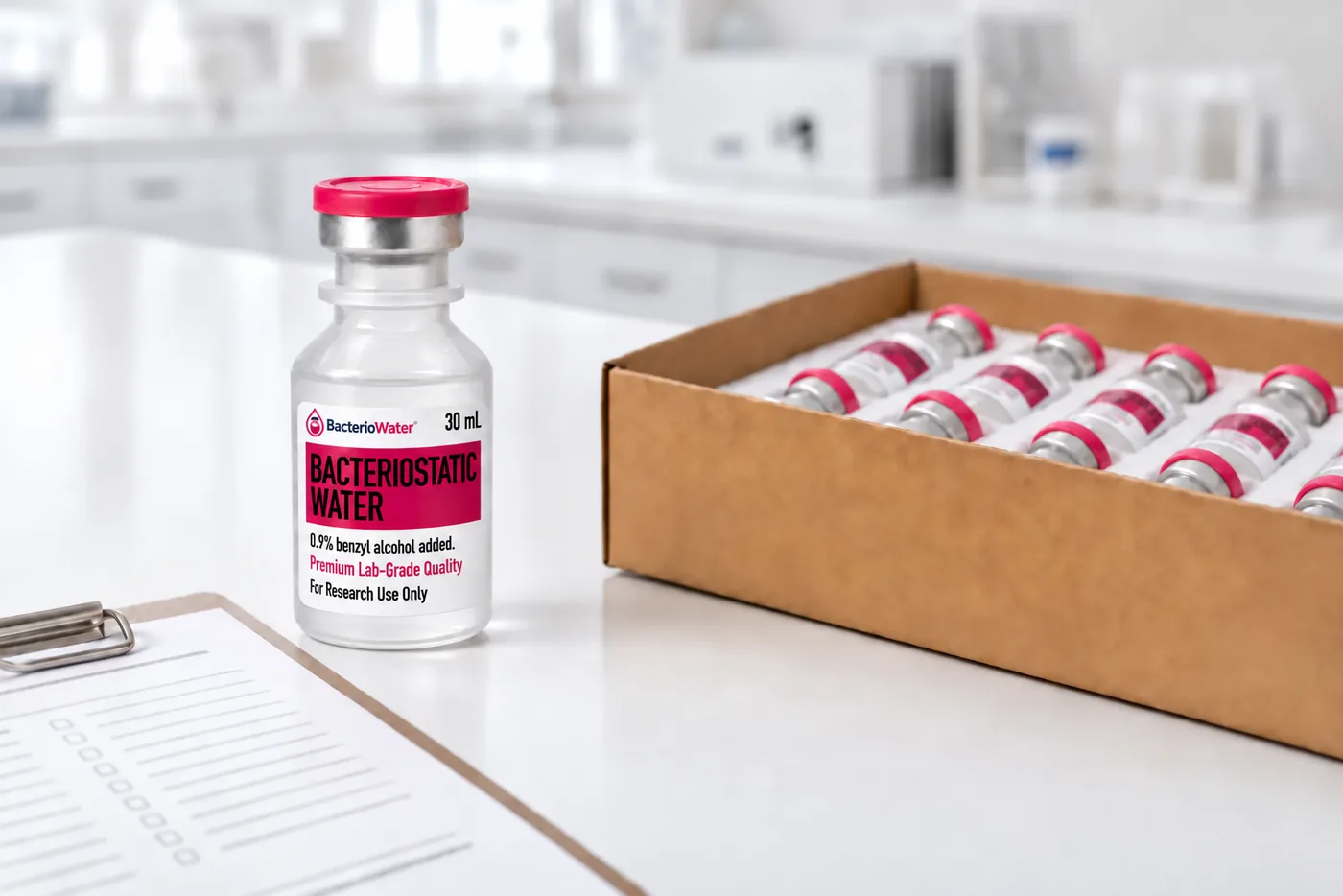
Five fields, recorded once per vial, cover almost every question anyone will ask later: lot code, date received, first-puncture date, storage location, and who opened it. Our vials carry the lot code printed on the label, and the certificate for that lot is published, so the chain runs from your bench back to the analysis without a phone call.
This is also what makes work reproducible. A methods section that names the reagent lot lets a reader match your material to a published certificate; one that says ‘bacteriostatic water’ names a category. The certificate for the current lot is the document to cite.
When to discard a vial
- Visible particulate, cloudiness, or any change in colour.
- A cracked, leaking or deformed container.
- A stopper that is torn or lifted, or a crimp seal or flip-off cap that is missing or compromised.
- The labelled expiry date has passed.
- The in-use date you assigned at first puncture has passed.
- Any vial whose storage history you cannot account for — including known freezing, heat excursions, or a shipment left outdoors.
Dispose of vials according to your institution’s waste procedures. A vial in doubt is worth a few dollars; a run repeated because of one is worth considerably more.
Quick reference
| Question | Short answer |
|---|---|
| Storage temperature | 20–25 °C, controlled room temperature |
| Refrigerate? | Not required, and not recommended as routine storage |
| Freeze? | No — excluded by the label |
| Light | Protect from strong light; keep vials in the carton |
| Unopened shelf life | Until the expiry printed on that lot’s label |
| After first puncture | Assign an in-use date; 28 days is the usual maximum |
| Repeat access | Yes, with aseptic technique at every entry |
For laboratory research use only. Not for human or veterinary use. Nothing in this article is a dosing, protocol, or medical instruction. Read the full RUO disclaimer.
References
USP <659> Packaging and Storage Requirements
Defines controlled room temperature as 20–25 °C with permitted excursions of 15–30 °C.
USP <797> Pharmaceutical Compounding — Sterile Preparations
Source of the 28-day beyond-use date applied to preserved containers after initial puncture.
Product label and storage statement
The storage conditions quoted here are printed on the vial.
PubChem CID 244 — benzyl alcohol
Physical and chemical data for the preservative, including its oxidation to benzaldehyde.
Questions this raises
Does bac water need to be refrigerated?
No. The label specifies controlled room temperature, 20 °C to 25 °C. Refrigeration offers no benefit for a preserved aqueous solution stored within its labelled period, and it moves the vial closer to a freezing risk it is not meant to take.
What should be done with a vial that has frozen?
Treat it as compromised. Freezing is excluded by the label because the expansion stresses the stopper seal, and a vial that has been through a freeze-thaw cycle can look entirely normal afterwards. Record the excursion and discard the vial under your institution’s waste procedures.
Does bac water expire?
Yes. A sealed vial is good until the expiry date printed on that lot’s label, when stored as labelled. Once the stopper is punctured, the in-use date set by your own procedure applies as well; USP <797> gives 28 days as the usual maximum for a preserved container. No supplier can extend either date after the fact.